
Julio cooked a spectacular dinner of stuffed eggplant, stuffed squash, tomato stewed okra, and flaming cheese!
Author: JP
-
Hens added to the flock
After our house meeting last week we mucked out the coop to get it ready for some new birds. Maggie knows a lady outside of town with roosters and hens who agreed to sell us a few full grown layers when she heard about our recent tragedy with the pitbull. After cleaning out the coop and installing some perches made out of down limbs from the yard, a few of us went chicken shopping.

These two chickens are mixes of different breeds; on the left mainly Araucana, on the right Wyandotte. The breeder had a small operation and kept all her birds together creating eclectic mixes of colors and patterns. Before we had 4 Rhode Island Reds that were pretty much indistinguishable, which left us with no answer to the common question, “What’s this one’s name?” We made a point to pick out very different looking birds and have since begun the process of observing their behavior and choosing appropriate names.

We also got around the hanging up the feed dispenser, which seems to greatly reduce waste. More about the chickens to come. To see more photos check out my flickr stream starting here.
-
What do bees do in the winter?

Unless you have a beehive in your backyard, you don’t see a lot of honeybees during Winter. In order to survive the long cold between flower blooms, the whole colony balls up inside of the hive and conserves heat by rubbing against one another. This mass of bees starts at the bottom of the hive and moves up the center eating all the honey. If they built up enough of a stockpile and the beekeeper didn’t take it all in the Fall, there will be enough to last till the Spring bloom. We didn’t harvest any honey last Fall, in fact Robby added an extra box of honey for the weaker of the two colonies (note the white box).Another factor that helps the bees survival over the Winter is death. The population of the hive drops dramatically from 50,000+ at the peak, all the way down to a few thousand. This greatly reduces the rate at which the colony consumes the honey stores.

Of course, with fewer workers around general hive cleaning maintenance is neglected, and the bottom board becomes a mass open grave. The bodies pile up next to puddles of excrement almost blocking the hive entrance.
On nice sunny Winter days some activity can be viewed around the hives. These photos were taken when the temperature was hovering around freezing, but the sun was thawing some of the accumulated snow. Bees were peaking out of the hole in the hive.

I sat and watched with my camera, eager to see where the bees were venturing out to, and for what purpose.

The purpose of her flight quickly became obvious. After scurrying around along the surface of the snow for a few minutes, this bee keeled over and died.

Perhaps in a selfless act, she sacrificed herself so the rest of the colony could have enough to eat and survive. Or perhaps she was denied access to the honey stores and escaped only to find the cold white doom outside.
A lot of what I’ve read about beekeeping suggests thinking about the entire colony as one living organism, and each bee, while performing a specific set of tasks, functions as the tissues and organs. So, like a bear who hibernates through Winter, the hive emerges in the Spring leaner, and eager to build up and stockpile of food. While thousands of dead bees littered around the hive seems grim, it is all part of the process of seasonal regeneration.
-
RIP, chickens
On Thursday, February 4th 2010, a loose pitbull entered our yard and killed six of our chickens.

Among the casualties were our alpha-hen, Ginger (pictured above), Stegasaurus, Lucille, and all of our Rhode Island Reds. The pitbull was picked up by animal control and the owners have been instructed to compensate us for the loss.
It’s hard to put into words the emotions that this incident created. We’ve lost chickens to predators and disease before, and we had plans to butcher several hens this Spring. The mental image that causes me the most sadness, all the hens watching in terror as the dog kills one after another of their flock-mates, is hard to push out of my head.
The flock is down to four chickens, three leghorns and an ISA Brown. We plan on getting more hens soon, stay tuned…
-
Bee update from R. Nagel

Robert wrote an update on the beehives on his blog. Here’s the whole thing.
”
Well last weekend (November 2) the temperature was fairly warm, the sun was shining, and the wind was lazily blowing. It was a good time to check the hives and I will be periodically checking the weak hive throughout the winter. Unfortunately, due to the late season swarm that took place in late July I believe, on hive has no food. And by no food I mean the hive has no honey.
Bees spend all summer preparing for winter. In the warm growing season they gather pollen and nectar from almost every plant within about a 2 mile radius and take it back to the hive and store it in the honey comb. By fanning their wings, they turn the nectar to honey by evaporating the water. Once the honey comb is full, it is capped with a white wax and left alone. Unless the bees decide to swarm. When the bees decide to swarm, they are dividing the colony in two and sending much of their honey stock to the new colony. This means that the honey is lost when the bees swarm.
When the one hive swarmed, they lost not only lots of honey, but also the queen. I’m not sure what happened, but without a queen and her guiding pheromones to control the worker bees, many of them simply stayed in the hive and ate honey. So instead of gathering at least 120 pounds of honey for winter, the bees had nothing.
 Some bees gathered on some frames discussing where the best flowers of C-U.
So this means I have to probably once every couple weeks go to the hive and give them some sugar syrup. I can make sugar syrup by mixing two parts sugar to one part water with some heat. A problem is that the syrup could freeze and the bees might not be able to get to it. Another problem could be that the sugar syrup stays too long in the container and goes bad before its all eaten.
Amazingly the hive stays relatively warm in winter. Although the outside temperature may drop to many degrees below zero, the core of the hive maintains a temperature of more than 90 degrees fahrenheit. The bees do this by clustering and then slowly circulating. Bees that have been on the outside of the cluster slowly move in towards the warmer middle and bees from the warm center slowly move outward. The queen, of course, is always the center of attention.
But without any honey, the bees have no energy to produce heat and the hive may freeze and/or starve to death. This would be pretty depressing so I am going to try my best to give the bees all they need to eat.
”
-
planting pawpaw seeds
The other day I stopped by the house on Washington St that has pawpaw trees growing in the yard. A nice lady named Ruth greeted us in her driveway and we spoke for awhile about her trees. They were planted 45 years ago by her husband who saved a few seedlings from a grove that was about to be bulldozed on campus.

Happy to share her bounty of fruit, she graciously served us slices of freshly ripe pawpaw and sent us each home with a few fruits. When I told her I was interested in growing my own, she gave me a container with hundreds of seeds. I also saved all the seeds from the fruits she gave me.
Eating Ruth’s pawpaws was the first time I’d ever eaten a fully ripe one. I thought they were incredibly delicious.
Normally people plant the seeds in deep containers and transplant the seedlings after they’ve grown a bit. First, however, the seeds need to experience a period of cold lasting 90-120 days, called stratification. This is achieved by refrigerating the seeds during the winter. Of course this is a lot of work and it requires patience, a quality that I can’t always depend on myself having.
My plan is to plant all of the seeds in our shady front yard. The grass grows terribly under an old Maple tree, and pawpaws can tolerate a lot of shade. I chose to plant the seeds directly into the soil, allowing them to stratify naturally during the winter. This reduces the overall amount of work. Instead of planting a few seeds and carefully watching them, I planted a lot of seeds and allowed nature to do the rest of the work.
Using a rebar spike I stabbed the ground and dropped a seed, over and over, until over 100 were planted. The idea to plant this way came from this movie. If none of them come up, no biggie, the whole process took less than an hour. However, if some come up, then a lot will, and the chances of a few surviving are better than slim.

After I planted them I received this email back from a paw paw expert: “Maples are difficult trees to plant pawpaws under because the maple roots are so aggressive and out compete the pawpaw roots for water and nutrients. At least that is true in general if not very every situation. Pawpaws grow very often in association with tulip poplar and ash. If your soil is deep and rich, then maple is probably okay.” So I guess I have to hope our soil is “deep and rich.”
The seeds will first grow a 10 inch taproot before emerging above ground next Fall. Sometime in August 2010, I’ll be looking for tiny seedlings and hoping that somehow they’ll survive the following Winter and grow into trees.
I zipped up all my pawpaw research and you can download it here. Also, this page is loaded with info.
-
Pan-Fried Jerusalem Artichokes in Sage (vegan) Butter
 The species in the la casa permaculture garden were chosen for their niche in the whole system. Helianthus tuberosus, aka jerusalem artichokes or sunchokes, produce tasty tubers
 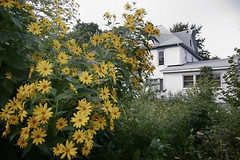 underground and beautiful clusters of yellow sunflowers above ground. The plants grow to almost 10 feet and the tubers can grow as thick as your wrist. Although most of the ones I harvested today were about as thick as your thumb.
You may be confused. They’re not artichokes, and they’re definitely not from Jerusalem, so what are they? Well, they are more like potatoes that shoot off the roots of a native sunflower. They grow vigorously and can compete with most weeds, however they don’t store as easily as potatoes and so are less commercially viable. They are a popular permaculture plant.
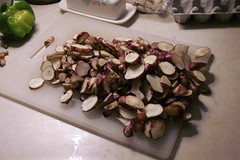
I had a craving for something fried so I found a recipe for Pan-Fried Jerusalem Artichokes in Sage Butter on epicurious. I went out just before dark and dug up a bunch of tubers.

They were very aromatic as I was digging them out and washing them. It took awhile to scrub and clean all the dirt off. From then I followed the recipe, doubling it and subbing vegan butter for regular butter.

Ingredients
- 3 tablespoons butter, divided
- 2 tablespoons olive oil
- 1 pound Jerusalem artichokes,* scrubbed, cut crosswise into 1/4-inch-thick rounds
- 3 tablespoons coarsely torn fresh sage leaves, divided
- 2 teaspoons fresh lemon juice
- 2 tablespoons chopped fresh Italian parsley
Preparation
Melt 1 tablespoon butter with olive oil in large nonstick skillet over medium-high heat. Add Jerusalem artichokes and half of sage. Sprinkle with salt and pepper. Sauté until brown and just beginning to soften, turning frequently, about 10 minutes. Using slotted spoon, transfer Jerusalem artichokes to shallow serving bowl. Add remaining 2 tablespoons butter and sage to skillet; fry until sage darkens and begins to crisp, about 30 seconds. Add lemon juice; simmer 1 minute. Pour lemon-sage butter over Jerusalem artichokes in bowl, tossing to coat. Season with salt and pepper. Sprinkle with parsley.
The result: well it was my first time cooking with them and I used the wrong type of pan. Some slices were cooked thoroughly til mush, others were still crunchy and undercooked. The flavor I thought was quite good and a few housemates agreed.
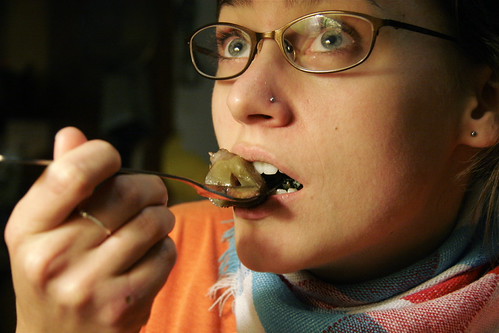
WIN!
Here’s some research about jerusalem artichokes I found online, zipped up.
-
Yard Sale

small version of yard sale flyer Our yard sell happened this past Saturday. Aside from a few complications and miscommunications, the sale went smoothly. It was a nice day and lots of friends stopped by. As planned, G & Ts were drunk in honor of Maria’s day of birth!
In total we pulled in between 250-300 bucks, woohoo! There’s still a lot of items left however, so we’re now having a FREE SALE. Meaning: come take whatever you want.
I had to work during the morning part of the yard sale and an anonymous photographer (named Andrew) took some nice snaps from the sale: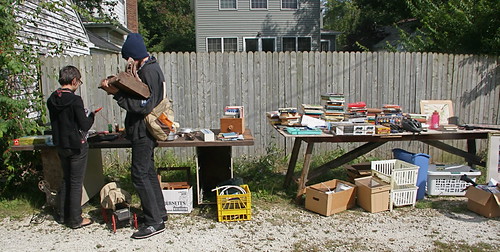



-
mantid
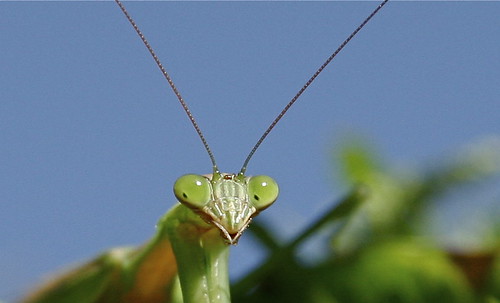
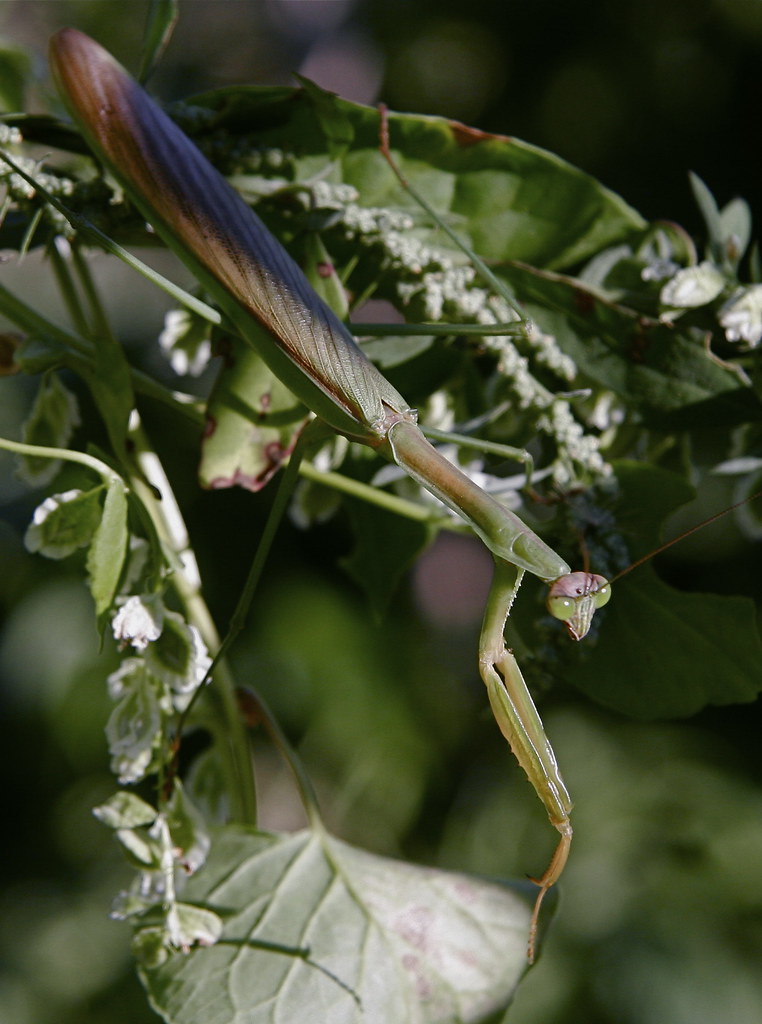
After finding their egg sacks in the Spring, I hadn’t seen a single mantis around the yard until today.
-
volunteer on student farm: get tons of free veggies
I went this morning to help on the new student farm located south of campus. The farm’s manager, Zack, showed me and a group of volunteers around as we helped out harvesting.
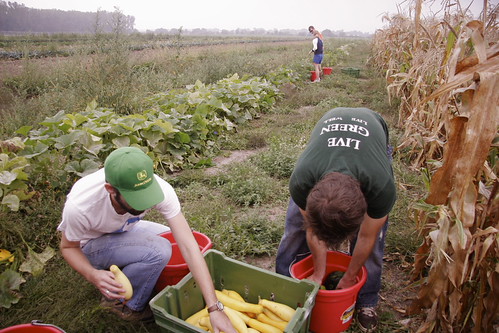
The produce from the farm is sold to University Dining Services and goes to feed kids living in the dorms. The student farm is part sponsored by the dining halls and part by the College of ACES. This is the FIRST year planting crops and they’re supplying a lot of food to the dorms.


We picked mostly squashes but some basil and parsley too.
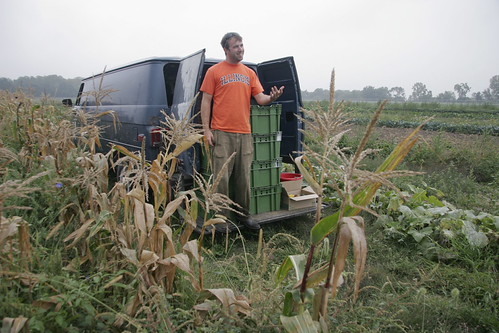
That’s Zack on the back of the van that Dining Services gave to the project.

The best part is that after a few hours of work, they let you take home as many veggies as you can carry! My roommates will be happy when they get home. -
paw paws, awesome
The paw paw genus (asimina) contain the largest edible fruit indigenous to this continent (says wikipedia). They apparently taste like a cross between a banana, a mango, and a pineapple. I’ve just begun learning about paw paws and recently was at a paw paw forest about an hour away.

The big leaves give the plant away, but the fruit are even more distinguishable.

Paw paws a very fascinating, I would recommend the wikipedia entry as a good introduction. Kentucky State University is building a great website for paw paw information and research of which there is surprisingly little. Compared to standard orchard fruits, not a lot of people are working with paw paws because they have a very short shelf life. For the backyard orchardist who doesn’t have to worry about shipping and storage, the paw paw could be an easy delicacy. Due to the fact that they’re indigenous, they are extremely pest resistant.There’s one paw paw on the Urbana Fruit Map in someone’s yard and they’re not overhanging the sidewalk (yet), so don’t take any!
Paw paws grow densely in the understory layer. Next time you take a ride down Washington St stop and take a look at the beautiful trees with the big leaves.
-
late summer hive check – mystery queen
Robbie and I opened up the hives a few weekends ago to take an inventory of the healthy hive and see how much brood the new queen has produced in the weaker hive. Sadly, we didn’t see a lot of honey in the honey supers (the shallower frames on top). We figured this was some what to be expected since our hive was just getting built up when most of the plants were producing nectar. It was a timing issue, and we were late getting our hives started.

You can see that there is some capped honey in the middle, but the bees have barely drawn out the wax comb towards the edges of the frame.In the hive that recently had been re-queened, there was a clear sign that the new queen had been successfully introduced. You can see in the photo below that some of the cells have a dark yellow cap on them. That’s called ‘capped brood’, and in a few weeks fully developed bees will eat their way out and begin working right away.

The brighter orange cells are pollen stores.When we first opened up the second hive we immediately noticed something strange. Right in the corner of the hive that we pried open with the hive tool, there was an unmarked queen hiding out.
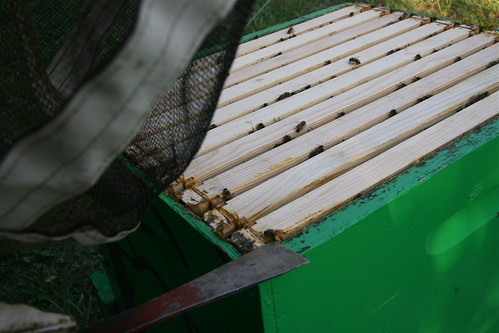
There she is about as far away from the nucleus of the hive as possible.

You can see her elongated abdomen and short wings. We were hoping to find signs of the introduced queen and maybe spot her, and oddly the first bee we see after opening the hive is another queen. I suspect that before the first queen swarmed, the bees had already started feeding royal jelly to create a new queen. By the time she hatched we had stuck a new queen in, who has now taken over the colony.If you spend a moment to think about it, a very interesting tale of courtly coups could be extracted from this. Is the native born queen entitled to the crown? Who is this imposter queen who has stolen the throne and banished the rightful heir to the far reaches of the queendom? Did we screw up the natural order of things by adding a new queen when the bees were busy rearing a new one?
We scratched our heads (through the veils), set the mystery queen aside, and continued looking for signs of the introduced queen. When we were finished and putting the frames back in we found the unmarked queen very close to where she was before.

It seems as though she still had a few workers attending to her.
 La Casa Grande Colectiva